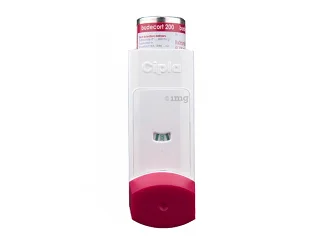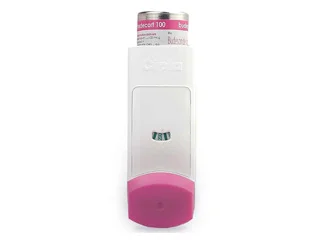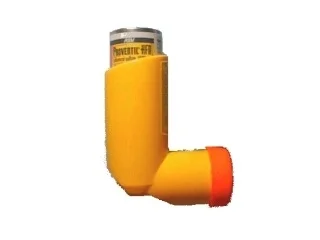
Ventolin Evohaler
100mcg
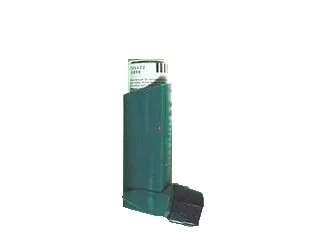
Ventolin Evohaler is salbutamol 100mcg as a pressurised inhalation solution for asthma and COPD, a fast-acting beta2 agonist.
From$20.40/ inhalerView
 Respiratory Health
Respiratory medicines include fast-acting relievers and regular controllers. They have different roles, and correct inhaler technique is essential.
100mcg
Ventolin Evohaler is salbutamol 100mcg as a pressurised inhalation solution for asthma and COPD, a fast-acting beta2 agonist.
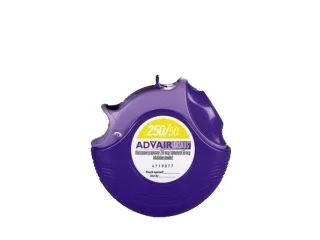
100/50 · 250/50 · 500/50mcg
Salmeterol with fluticasone inhalation powder in three strengths, used in the management of asthma and COPD. A long-acting beta2-agonist with a corticosteroid.
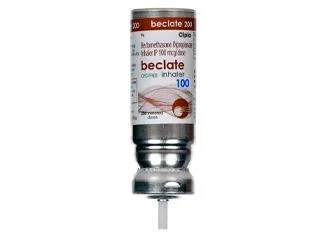
200mcg
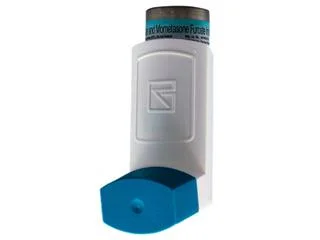
Beclate Inhaler carries beclometasone 200mcg as a pressurised suspension for asthma. An inhaled corticosteroid that damps airway hypersensitivity.
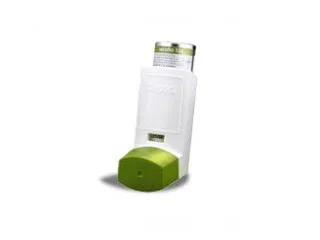
25/125 · 25/250mcg
Seroflo Inhaler carries fluticasone with salmeterol as a pressurised suspension for asthma and COPD, a corticosteroid with a long-acting agonist.
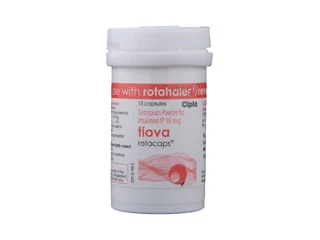
15caps
Tiova Rotacap is tiotropium in hard capsules loaded into a device, for chronic obstructive pulmonary disease. A long-acting M3 antagonist.
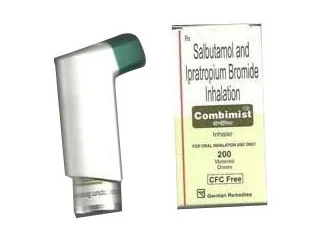
50/20mcg
Combimist L Inhaler pairs levosalbutamol with ipratropium as a pressurised inhalation for COPD and asthma. A beta2-agonist with an antimuscarinic.
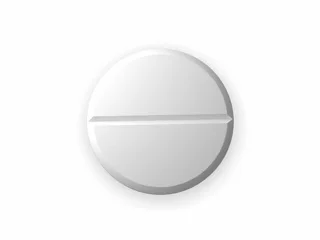
2 · 4mg
Ventolin Pills are salbutamol 2mg and 4mg tablets for asthma and COPD, the swallowed form of the beta2 agonist rather than the inhaled one.
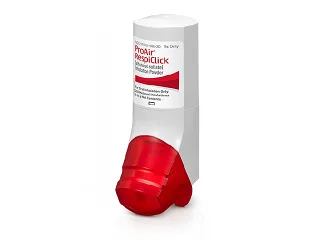
100mcg
Proair Inhaler is salbutamol 100mcg as a pressurised suspension for asthma and COPD, a short-acting beta2 agonist for quick airway opening.
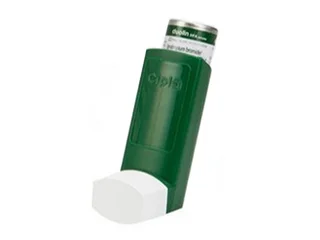
9mcg
Tiova Inhaler is tiotropium 9mcg as an inhalation powder for chronic obstructive pulmonary disease, blocking muscarinic receptors in the airway.
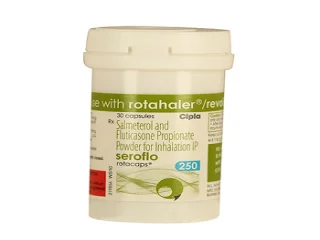
50/250mg
Advair Rotahaler carries fluticasone with salmeterol as an inhalation powder for asthma and COPD, pairing an inhaled corticosteroid with a beta2-agonist.
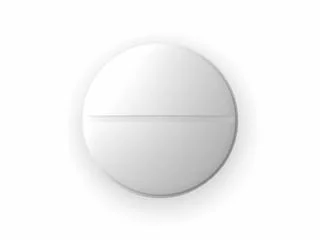
8mg
Bromhexine 8mg tablets, used for respiratory tract disorders with thick, sticky mucus. A mucolytic that thins secretions so they clear more easily.
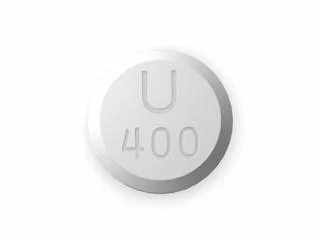
400mg
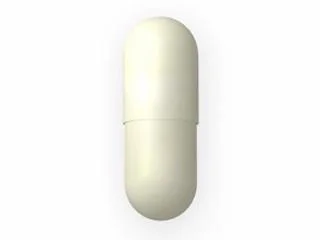
Theo-24 CR is theophylline 400mg in a modified-release capsule for asthma and COPD, a methylxanthine that relaxes the bronchial muscle.
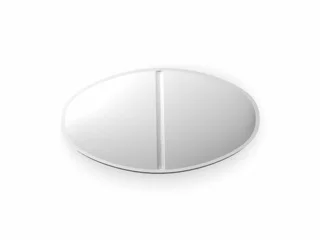
400mg
Uniphyl CR is theophylline 400mg as a modified-release tablet rather than a capsule, for asthma and COPD. It inhibits the phosphodiesterase enzymes.
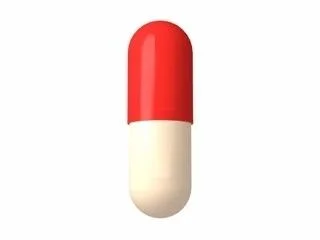
200mg
Theo-24 SR is theophylline at the lower 200mg modified-release strength for asthma and COPD, a xanthine that raises cyclic AMP in the airway.
Select a listed product and pack to order online. Suitability and supply depend on clinician and pharmacy checks, prescription requirements and the prescribed inhaler device.
Relievers such as salbutamol can act quickly. Inhaled corticosteroids such as budesonide and fluticasone help control airway inflammation. Long-acting medicines include salmeterol and tiotropium. Inhaled delivery can limit, but does not eliminate, whole-body adverse effects.
Uses include asthma and chronic obstructive pulmonary disease. Some nasal or inhaled medicines may also be used for allergic rhinitis, but devices and instructions differ.
Ask a clinician or pharmacist to check inhaler technique and whether a spacer is needed. Do not stop a controller when symptoms improve unless advised. Rinsing the mouth after an inhaled corticosteroid may reduce local adverse effects. Heart conditions, glaucoma, urinary problems and other medicines can affect selection.
Seek emergency help for severe breathlessness, difficulty speaking, blue or grey lips, confusion, exhaustion, chest pain, or symptoms that do not improve after following the prescribed action plan and reliever instructions.

22 Sept 2026 ⋅ 7 min read
Understand how allergy injections and under-the-tongue immunotherapy differ, why testing alone is not enough, and what safety and time commitments matter.
Read guide
22 Sept 2026 ⋅ 7 min read
Why symptoms and an antibiotic name cannot identify a bacterial infection, and what diagnosis, allergy, site and resistance change.
Read guide
22 Sept 2026 ⋅ 7
Understand how a personalised asthma action plan connects daily treatment, early warning signs, reliever instructions and urgent-care decisions.
Read guide
A practical way to compare multi-symptom cold and flu products by active ingredient and avoid accidentally taking the same medicine twice.
Read guide
22 Sept 2026 ⋅ 6 min read
Understand reliever, preventer, AIR and MART inhaler roles, and why ingredients and an asthma action plan matter more than device colour.
Read guide