
Asthma
Asthma is a long-term inflammatory airway condition in which airflow varies over time, causing wheeze, cough, chest tightness or breathlessness.
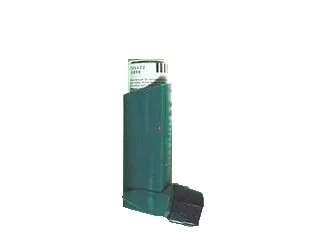
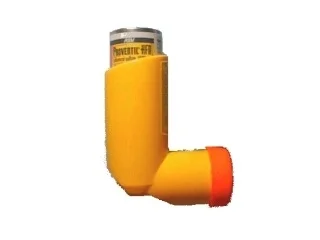
Ventolin Evohaler
100mcg
Ventolin Evohaler is salbutamol 100mcg as a pressurised inhalation solution for asthma and COPD, a fast-acting beta2 agonist.
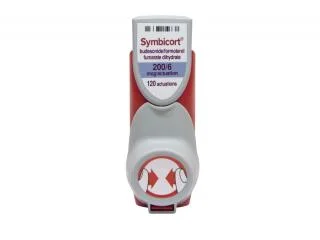
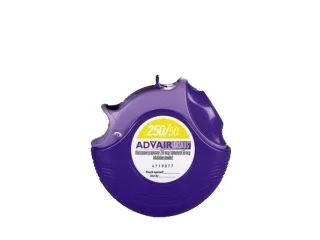
Advair Diskus
100/50 · 250/50 · 500/50mcg
Salmeterol with fluticasone inhalation powder in three strengths, used in the management of asthma and COPD. A long-acting beta2-agonist with a corticosteroid.
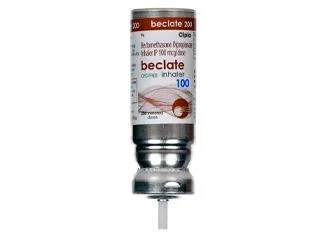
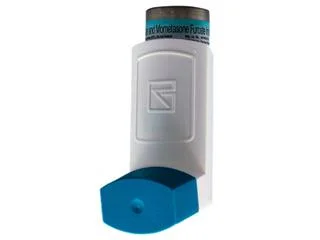
Beclate Inhaler
200mcg
Beclate Inhaler carries beclometasone 200mcg as a pressurised suspension for asthma. An inhaled corticosteroid that damps airway hypersensitivity.
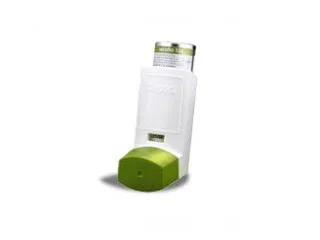
Seroflo Inhaler
25/125 · 25/250mcg
Seroflo Inhaler carries fluticasone with salmeterol as a pressurised suspension for asthma and COPD, a corticosteroid with a long-acting agonist.
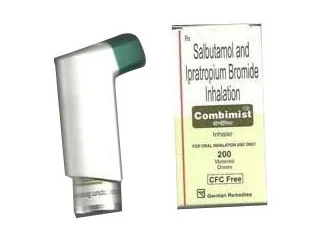
Combimist L Inhaler
50/20mcg
Combimist L Inhaler pairs levosalbutamol with ipratropium as a pressurised inhalation for COPD and asthma. A beta2-agonist with an antimuscarinic.
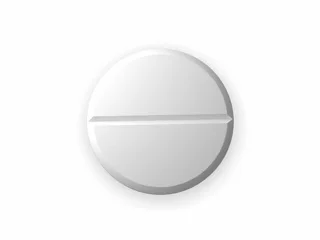
Ventolin Pills
2 · 4mg
Ventolin Pills are salbutamol 2mg and 4mg tablets for asthma and COPD, the swallowed form of the beta2 agonist rather than the inhaled one.
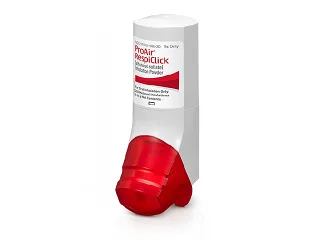
Proair Inhaler
100mcg
Proair Inhaler is salbutamol 100mcg as a pressurised suspension for asthma and COPD, a short-acting beta2 agonist for quick airway opening.
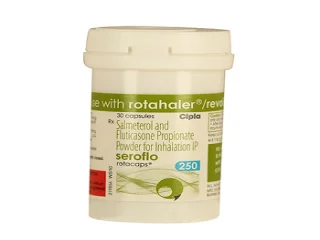
Advair Rotahaler
50/250mg
Advair Rotahaler carries fluticasone with salmeterol as an inhalation powder for asthma and COPD, pairing an inhaled corticosteroid with a beta2-agonist.
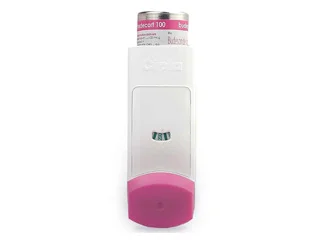
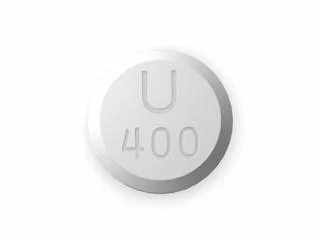
Theo-24 CR
400mg
Theo-24 CR is theophylline 400mg in a modified-release capsule for asthma and COPD, a methylxanthine that relaxes the bronchial muscle.
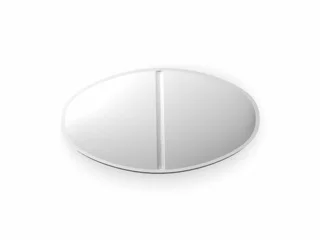
Uniphyl CR
400mg
Uniphyl CR is theophylline 400mg as a modified-release tablet rather than a capsule, for asthma and COPD. It inhibits the phosphodiesterase enzymes.
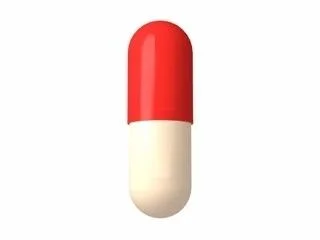
Theo-24 SR
200mg
Theo-24 SR is theophylline at the lower 200mg modified-release strength for asthma and COPD, a xanthine that raises cyclic AMP in the airway.
Key points
- Diagnosis should be supported by variable airflow limitation when possible because several heart and lung conditions can mimic asthma.
- Frequent reliever use, night waking or activity limitation suggests poor control and a need to review preventer treatment.
- Correct inhaler technique and adherence are essential; changing medicines cannot compensate for a device that is used incorrectly.
The listings below are not an asthma action plan; inhaler choice and dose depend on age, severity, device technique and current control.
Assessing control and triggers
Spirometry or peak-flow variability can support diagnosis. Reviews consider daytime and night symptoms, attacks, oral steroid use and reliever frequency. Viral infections, smoke, allergens, exercise and workplace exposures can trigger symptoms, while reflux or vocal-cord problems may coexist.
Relievers and preventers
Fast-acting bronchodilation eases acute tightening, while inhaled corticosteroid reduces underlying inflammation and future attack risk. Modern plans often ensure anti-inflammatory treatment accompanies reliever use. Device selection should account for inspiratory ability, coordination and preference; a spacer can improve delivery from compatible inhalers.
When to seek urgent care
Use the written action plan and seek emergency help for severe breathlessness, blue or grey lips, inability to speak in full sentences, exhaustion, confusion or little response to prescribed reliever treatment.
Further reading
What causes asthma?
Asthma is a long-term inflammatory airway condition, and symptoms can be triggered by viral infections, smoke, allergens, exercise and workplace exposures. Reflux or vocal-cord problems may also occur alongside it.
What are the symptoms of asthma?
The main symptoms are wheeze, cough, chest tightness and breathlessness, which come and go as airflow changes. Needing your reliever often, waking at night or being limited in what you can do are signs that asthma is poorly controlled.
How is asthma treated?
A fast-acting reliever opens the airways during an attack, and an inhaled corticosteroid reduces the underlying inflammation and the risk of future attacks. Many current plans pair anti-inflammatory treatment with every use of a reliever, and good inhaler technique and regular use matter.
What can I order for asthma?
SGMeds lists products containing salbutamol, theophylline and budesonide for asthma, for example Ventolin Evohaler (salbutamol) and Symbicort (budesonide and formoterol). Each product page gives the strengths and forms.
Can I buy medicines for asthma over the counter in Singapore?
Yes, online. SGMeds does not ask for a prescription to order medicines for asthma: we place the order with our pharmacy partner, which prepares it and arranges delivery on your behalf.
Ordering without a prescription →Can I order medicines for asthma online in Singapore?
Yes, here on SGMeds: choose the product, strength and pack, then check out. We deliver to Singapore and Malaysia. Express shipping is tracked and takes up to 1 week, and Regular shipping takes up to 3 weeks.
How ordering works →Related articles

22 Sept 2026 ⋅ 7
Asthma Flare-Ups: What a Written Action Plan Should Contain
Understand how a personalised asthma action plan connects daily treatment, early warning signs, reliever instructions and urgent-care decisions.
Read guide
22 Sept 2026 ⋅ 6 min read
Reliever vs Preventer Inhalers: Why the Role Matters More Than Colour
Understand reliever, preventer, AIR and MART inhaler roles, and why ingredients and an asthma action plan matter more than device colour.
Read guide