Key takeaways
- HealthHub’s sitagliptin/metformin guidance names two active medicines, recommends taking the product with or after food, and asks about pancreatic, heart, kidney and liver problems. HealthHub
- Fewer tablets can mean less flexibility to adjust components. NICE advises introducing medicines stepwise, checking each for side effects and effectiveness. NICE
- The ADA advises against adding a DPP-4 inhibitor to GLP-1-based treatment because this adds no glucose lowering. Check the full medicine list, including the components inside combination tablets. ADA 2026
Single-ingredient versus combination diabetes medicines: how to read the difference

HealthHub’s sitagliptin-and-metformin page advises taking the combination with or after food to reduce stomach discomfort, nausea and diarrhoea. It also asks about pancreatic, heart, kidney and liver problems, and planned scans or surgery. One tablet still brings together the precautions of its ingredients.
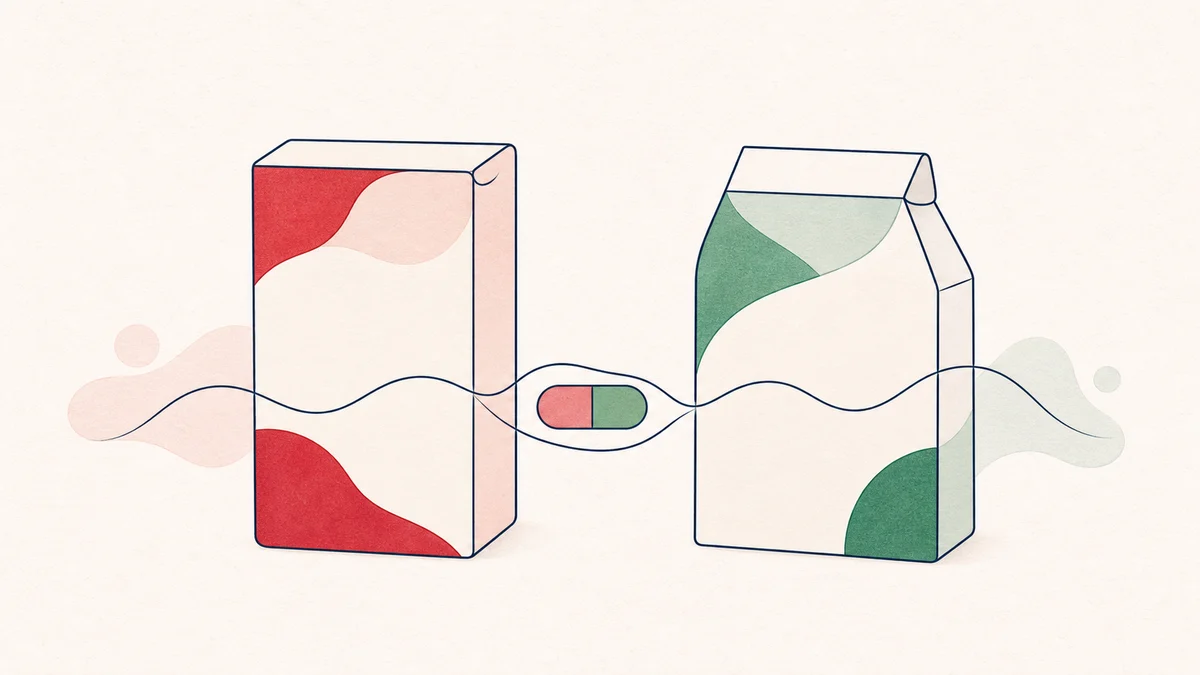
A single-ingredient product contains one active drug. A fixed-dose combination contains set amounts of two or more, which may simplify the routine without making them one mechanism. Read the full ingredient and release-form information before comparing boxes.
What is a fixed-dose combination?
It puts specified amounts of more than one active ingredient into a single dosage form. Examples include metformin with sitagliptin, or metformin with empagliflozin. Each ingredient retains its mechanism, class, contraindications and adverse effects.
In HealthHub’s sitagliptin-and-metformin guide, metformin helps the body use insulin and reduces sugar made by the liver. Sitagliptin increases insulin release after meals and reduces liver sugar production too. The guide describes using the medicines with a healthy diet and regular exercise.
A paired strength label usually gives a number for each ingredient, separated by a slash. Read it as two component strengths, not an addition problem. The brand name alone may leave those ingredients unclear.
Is combination treatment the same as a combination tablet?
Treatment can involve separate products as well as a fixed combination. Someone may take several single-ingredient medicines, or a combination tablet plus another diabetes medicine. The number of boxes does not count the active drugs reliably.
Put “sitagliptin” and “metformin” on the medicine list, with the strength and release form from the combination packet. A brand name alone can hide both. If you also have a separate metformin product, bring that packet too and ask the pharmacist to check for unintended duplication.
Not every pair adds useful glucose lowering. ADA recommendation 9.18 advises against combining a DPP-4 inhibitor with a GLP-1 receptor agonist or a dual GIP/GLP-1 receptor agonist, because it adds no glucose lowering beyond the GLP-1-based treatment. This is a reason to check the whole regimen, even when its products have different names.
Why are several diabetes medicines used together?
Different classes act on different pathways, and treatment needs can change. Metformin mainly reduces liver glucose production and improves insulin sensitivity. DPP-4 inhibitors such as sitagliptin support glucose-dependent insulin release and reduce glucagon. SGLT2 inhibitors such as empagliflozin increase glucose excretion in urine.
ADA recommendation 9.6 in the 2026 Standards of Care considers combination therapy at the start of treatment to reach individual glucose goals sooner. The preceding recommendation lists heart, kidney, weight and other conditions, hypoglycaemia, tolerability, cost, access and preferences among the selection factors.
Recommendation 1.20.2 in the NICE guideline, amended in February 2026, introduces metformin and other initial medicines one at a time, starting with metformin. Where an SGLT2 inhibitor is part of that plan, NICE says to add it as soon as metformin is at the maximum tolerated amount. Its rationale is to identify intolerance to the first medicine before introducing the second, without leaving someone on metformin alone for a prolonged period. These decisions concern the individual components; fewer tablets do not make treatment inherently stronger or better.
| Comparison point | Separate single-ingredient products | Fixed-dose combination product |
|---|---|---|
| Active ingredients | One per product | Two or more in one product |
| Tablet burden | May require more tablets | May reduce tablet count |
| Component adjustment | Components can usually be changed separately | Available fixed strengths constrain separate adjustment |
| Ingredient identification | Each label is usually direct | Brand and two-strength labels can obscure components |
| Missed or stopped product | Affects the named ingredient | Affects every component in that product |
Do fewer tablets mean fewer side effects?
The ingredients’ adverse effects and precautions remain. Fewer tablets may simplify medicine-taking, but whether that helps adherence varies. Starting two ingredients together can also make an adverse effect harder to attribute.
HealthHub lists headache, flu-like symptoms, muscle or joint pain, diarrhoea, nausea, vomiting and stomach discomfort for sitagliptin/metformin. Its advice to take the product with or after food addresses some gastrointestinal effects. It also advises avoiding alcohol because of pancreatitis and lactic-acidosis risks.
Release form deserves a separate check. NICE recommendation 1.23.1 allows continuing standard-release metformin or discussing modified release when standard release is not tolerated or the person prefers a change. Its committee found no evidence in that review that modified release was more effective, but noted fewer gastrointestinal effects in clinical experience and potentially less frequent administration.
The suffix affects handling and instructions. Crushing or substituting a modified-release product can change delivery. Ask about the exact formulation rather than treating every metformin product alike.
What changes the answer?
The diabetes type, goals and other health conditions determine the plan. This comparison concerns type 2 diabetes; insulin-dependent situations need different planning. Heart, kidney and liver health affect benefits and precautions. Insulin and sulfonylureas generally carry more hypoglycaemia risk than several other classes, and combinations can change the overall risk.
ADA recommendation 9.14 gives every 3 to 6 months as an example interval for reviewing the medication plan and medicine-taking. Its recommendation 9.17 asks clinicians to reassess medicines with higher hypoglycaemia risk when another glucose-lowering medicine is started.
Pregnancy or breastfeeding needs specialist review. Gastrointestinal symptoms, urinary or genital effects, dehydration and injection-related problems differ between classes. Include other prescriptions, supplements and non-prescription medicines, as well as cost, access and practical difficulties following the plan.
Acute illness, fasting and surgery need individual temporary-management instructions. NICE’s SGLT2 section asks about previous ketoacidosis, intercurrent illness, dehydration and very-low-carbohydrate or ketogenic diets. Discuss a planned ketogenic diet with the treating professional if taking an SGLT2 inhibitor; do not improvise medicine changes.
Which warning signs need urgent help?
Follow the individual sick-day and hypoglycaemia plan and seek urgent assessment for severe symptoms. Confusion, seizure or loss of consciousness may indicate severe low glucose. Persistent vomiting with inability to keep fluids down or severe dehydration also needs urgent care.
Ketoacidosis can cause nausea or abdominal pain, deep or difficult breathing, unusual sleepiness or confusion. With SGLT2 inhibitors it can occur without extremely high glucose. Do not wait for an extreme reading or guess which component to omit; emergency care, the written plan and direct clinical advice take priority.
HealthHub’s sitagliptin/metformin guide also flags severe abdominal or back pain with ongoing nausea, vomiting or fever as possible pancreatitis. Its very rare lactic-acidosis warning includes prolonged vomiting or abdominal pain, feeling cold or excessively tired, and fast, shallow breathing, with higher risk when kidneys are not working properly. These need immediate medical advice.
For review, bring all boxes or clear label photos and glucose records if requested. Ask the pharmacist to identify every ingredient, class and release form and check duplication. A forum image of another two-number label cannot identify your product or determine its instructions.
Sources
- NICE: Type 2 diabetes in adults: management.
- American Diabetes Association Professional Practice Committee: Pharmacologic Approaches to Glycemic Treatment: Standards of Care in Diabetes - 2026.
- Singapore HealthHub: Sitagliptin and Metformin.
- Reddit r/PharmacyPH: Help me read this Used only as a label-literacy question signal.