Key takeaways
- HSA’s Document Guide lists ingredients requiring approval, including dextromethorphan, clonazepam and methylphenidate. Check every ingredient against the current guide. HSA
- Keep the dispensing-pharmacy label and original packaging, with the prescription or doctor’s letter and any required approval. HSA
- Apply at least two weeks before arrival if approval is needed. Staying in transit without immigration clearance changes the approval requirement, but prohibited medicines remain prohibited. HSA
Bringing medicines into Singapore: what to check before packing
A foreign prescription does not establish permission to bring a medicine into Singapore. HSA separates prohibited products, ingredients needing approval, and medicines that can enter without approval if all the personal-import conditions are met.
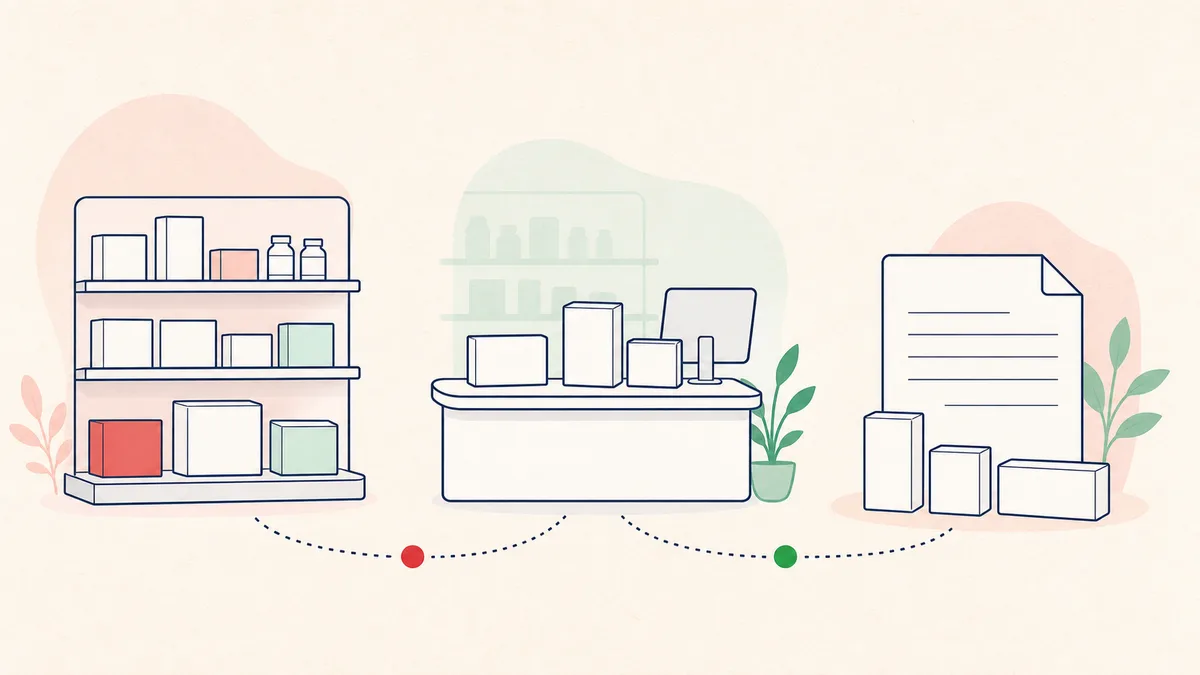
There are two lists to check in the Document Guide of 17 March 2026. The first page gives prohibited examples, including cannabidiol, cannabis extracts, delta-8-tetrahydrocannabinol and delta-9-tetrahydrocannabinol. Appendix A, starting on page 2, lists controlled substances for which you need approval. Check the ingredients even if the product was sold over the counter overseas.
What should be checked first?
Write down every active ingredient and the amount of medicine you intend to carry. Include the brand, strength, dosage form, prescribed directions and total quantity. The ingredient name lets you check the guide even when the overseas brand is unfamiliar.
On HSA’s personal-medication page, open the Document Guide and check Appendix A. It includes clonazepam and diazepam, methylphenidate, zolpidem and dextromethorphan. These are examples from the list, not all the ingredients requiring approval. The guide points to the Fourth Schedule to the Misuse of Drugs Regulations for the full prohibited list. HSA’s webpage also says the guide is for reference and does not replace the law.
Check combination products ingredient by ingredient. Sleep, pain, cough-and-cold and weight-management products can contain a restricted component alongside the familiar lead ingredient. Obtain the full composition of traditional, compounded or “natural” products too. A catalogue listing does not establish permission to import them.
When can medicine enter without prior approval?
Up to three months’ supply is allowed without approval only when every HSA condition is met. The medication must:
- be lawfully prescribed to you or an immediate family member in your country of residence;
- contain no controlled substance listed in Appendix A;
- contain no prohibited substance;
- not be in chewing-gum form; and
- not be a cell, tissue or gene therapy product.
HSA lists stem cells as an example of the last category. Its prohibition on chewing-gum medicines is another reason to record the dosage form, not just the ingredient.
The three-month limit does not exempt a small quantity of controlled medicine from approval. HSA says quantities above three months’ supply are not allowed through this personal-medication route. You may carry a prescribed product for an immediate family member, with that person’s documents, but not casually for friends or resale. HSA warns that carrying personal medicines for someone outside that exception can lead to confiscation or enforcement action.
What documents and packaging should travel with it?
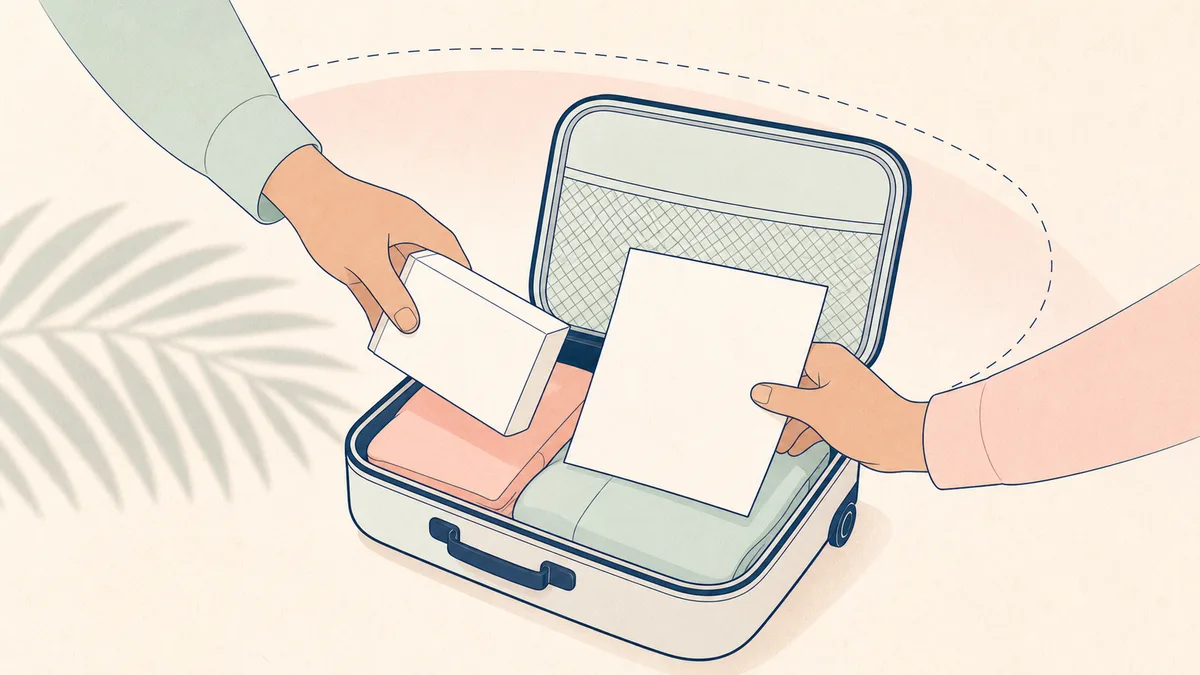
Carry the original pharmacy-labelled packaging and the prescription or doctor’s letter. HSA requires these for medicines entering without prior approval. The prescription or letter must be valid and come from your country of residence. Check the label for the patient’s name, medication name and quantity; these are the fields HSA specifies. Keep each family member’s medicine with that person’s paperwork.
For an approval application, HSA accepts PDF, JPEG or ZIP attachments. Complete the form in English. Its medical-documentation list asks for the patient’s and prescriber’s particulars, the medicine’s name and composition, prescribed dose and frequency, and total quantity.
Photographs have a separate job: showing the product name, all active ingredients, strength or concentration, directions, dosage form and dispensed quantity. Include every label panel needed to make those fields legible. HSA rejects incomplete applications; you would then have to submit again.
Save the prescription or letter and photographs in the travel folder with the itinerary and arrival date. Include any approval email and contact details for the prescriber and dispensing pharmacy. Keep medicine in hand luggage where clinically appropriate and permitted by airline/security rules. Check liquid, needle and cooling-device requirements separately, and follow the storage instructions. These transport checks still apply after HSA approval.
What is different about transit?
You can transit without HSA approval if you stay in the transit zone and do not clear immigration. HSA still prohibits the products on its prohibited list in transit. If baggage collection, a hotel, terminal arrangements or disruption means clearing immigration, the airside exception no longer describes your journey.
HSA’s traveller page was updated on 15 June 2026. Under “Change of travel plans”, it says an approval is specific to the stated arrival date and a change after approval requires a new application. Under “Upon arrival”, it says approved medicines need no customs declaration, but the approval email and supporting documents must be available if ICA officers request them.
The Singapore Customs reference is dated 31 March 2026. It covers import declarations and HSA product codes, including therapeutic products, devices, Chinese proprietary medicines and cell, tissue and gene therapy products. Use HSA’s traveller route for your personal medication and its supporting documents.
What changes the answer?
A change in contents, quantity, traveller or journey can change the permission needed. HSA’s family exception is limited to immediate family members for whom the products were prescribed. It does not extend to a friend’s medicine or resale. The three-month ceiling, prohibition on chewing-gum medicines and exclusion of cell, tissue and gene therapy products still apply. Recheck the arrival date and immigration arrangements if the journey changes.
Then check what else you are carrying. HSA directs animal-product queries to the Animal & Veterinary Service, food and drink queries to the Singapore Food Agency, and general border requirements to ICA. The HSA travel landing page has separate entries for medicines and medical devices. Device, airline, airport-security and customs rules may apply alongside the medicine checks.
What if departure is close and approval is still missing?
Submit at least two weeks before arrival; a late application may not be processed in time. If the status is unclear, contact HSA. Do not rely on a forum answer or conceal the medicine.
HSA’s page describes a possible alternative when an application cannot be processed in time: consult a Singapore Medical Council-registered practitioner in Singapore for medical advice and medication or a suitable substitute. It points readers to HealthHub’s licensed-provider directory and GPGoWhere. The option described is a consultation for advice and medication or a suitable substitute, not permission to carry an unapproved product.
Before you submit the list, check the active-ingredient and strength fields. Make sure the documents and photos describe the medicine you will actually pack.
Sources
- HSA Singapore: Travelling with medications to Singapore.
- HSA Singapore: Travelling with medication and medical devices landing page.
- Singapore Customs: Health Sciences Authority requirements for controlled items.
- Reddit r/askSingapore: Question thread about bringing prescription medicines Used only as a reader-question signal.