
Furosemide
Furosemide is a loop diuretic that increases salt and water excretion. It can also cause dehydration, kidney impairment and significant electrolyte changes. Listed uses include oedema and hypertension.
Key points
- Extra tablets are not a safe response to swelling or a high blood-pressure reading without clinical direction.
- Vomiting, diarrhoea, poor intake or heat can increase dehydration and kidney risk.
- Low sodium, potassium or magnesium can cause weakness, confusion, cramps or abnormal rhythm.
Select a listed product and pack to order online. Whether it suits you depends on indication and laboratory monitoring; ask your doctor or pharmacist.
Important safety checks
Review kidney or liver disease, gout, diabetes, low blood pressure, pregnancy and medicines such as NSAIDs, lithium, digoxin or other diuretics. Monitor weight, blood pressure, kidney function and electrolytes as directed.
When to seek urgent care
Seek urgent help for fainting, severe confusion, seizure, a new irregular heartbeat, very little urine, sudden hearing change, facial swelling or breathing difficulty.
Further reading
What is furosemide used for?
Furosemide is a loop diuretic used to treat oedema (fluid build-up) and high blood pressure. It works by helping your body pass more salt and water in your urine.
Which products contain furosemide?
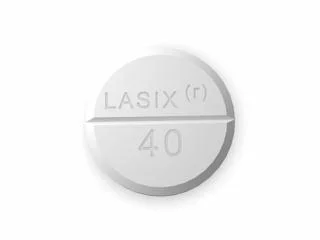
Products containing furosemide on SGMeds include Lasix and Frumil. Compare their forms, strengths and pack sizes.
How long does furosemide take to work?
Furosemide starts working about 1 hour after it is taken, and its effect lasts around 6 to 8 hours.
What are the side effects of furosemide?
Common side effects include passing a lot of urine and dizziness. It can also cause dehydration, low blood pressure and muscle cramps, while low sodium, potassium or magnesium can lead to weakness, confusion or an abnormal heartbeat. Tell your doctor or pharmacist if these bother you.
Can furosemide be taken with other medicines?
Furosemide can interact with several medicines, including anti-inflammatory painkillers (NSAIDs), lithium, digoxin, certain antibiotics (aminoglycosides) and other water tablets (diuretics). Check with your doctor or pharmacist before taking them together.
Who should not take furosemide?
It is not suitable if you have low blood volume, dehydration or you are not passing urine at all. Tell your doctor or pharmacist if you have kidney or liver disease, gout, diabetes or low blood pressure, or if you are pregnant.
What does furosemide cost in Singapore dollars?
Each product on this page shows a price for each strength and pack size in Singapore dollars, converted from US dollars, so the exchange rate can change the final amount. Larger packs usually cost less per tablet.
Payment and prices →Can I buy furosemide over the counter in Singapore?
Yes, online. SGMeds does not ask for a prescription to order furosemide: we place the order with our pharmacy partner, which prepares it and arranges delivery on your behalf.
Ordering without a prescription →Where can I buy furosemide in Singapore?
You can order furosemide here on SGMeds: choose the product, strength and pack, then check out. We deliver to Singapore and Malaysia. Express shipping is tracked and takes up to 1 week, and Regular shipping takes up to 3 weeks.
How ordering works →Related articles

23 Sept 2026
Heart-Failure Medicines Have Different Jobs
Understand why diuretics, renin-angiotensin medicines, selected beta blockers, MRAs and SGLT2 inhibitors are not interchangeable in heart failure.
Read guide