
Allopurinol
Allopurinol lowers uric acid and is used for long-term prevention in selected people with Gout or other urate-related conditions. It does not provide immediate pain relief during a flare.
Key points
- Gout flares can increase temporarily after starting urate-lowering treatment; this does not automatically mean treatment has failed.
- A new rash, fever, mouth sores or facial swelling can signal severe allopurinol hypersensitivity.
- Kidney function, ancestry-related genetic risk and major interactions affect safe treatment.
Select a listed product and pack to order online. Whether it suits you depends on diagnosis and monitoring; ask your doctor or pharmacist.
Important safety checks
Kidney and liver function, blood counts and medicines such as azathioprine or mercaptopurine require review. HLA-B*5801 testing may be relevant for people with higher-risk ancestry.
When to seek urgent care
Stop and seek immediate help for any new rash with fever, blistering, mouth or eye sores, facial swelling, breathing difficulty or jaundice. Markedly reduced urine or unusual bruising also needs urgent review.
Further reading
What is allopurinol used for?
Allopurinol is used for long-term prevention in some people with gout or other urate-related conditions. It lowers uric acid and is also used for high uric acid levels (hyperuricaemia) and uric acid nephropathy. It is not a painkiller and will not ease a flare that has already started.
How does allopurinol work?
Allopurinol blocks an enzyme called xanthine oxidase. This enzyme turns other substances into uric acid, so blocking it lowers the amount of uric acid in your blood and urine.
What allopurinol product does SGMeds list?
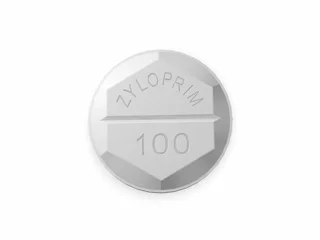
The allopurinol product on SGMeds is Zyloprim, and its page gives the strengths and pack sizes.
What is allopurinol called in other countries?
In other countries, allopurinol is also sold as Zyloric. Brand names vary between countries, so compare products by their active ingredient.
How long does allopurinol take to work?
Allopurinol can take 2 to 6 weeks before its full effect shows, and it is taken long-term. Gout flares can increase temporarily after starting urate-lowering treatment. That does not automatically mean treatment has failed.
What are the side effects of allopurinol?
Common side effects include rash, nausea and diarrhoea. Serious side effects include a severe hypersensitivity syndrome and a severe skin reaction, which need immediate medical attention. A new rash with fever, mouth sores or facial swelling can be a sign of severe allopurinol hypersensitivity, so stop and seek immediate help.
Can allopurinol be taken with other medicines?
Allopurinol can interact with azathioprine, mercaptopurine and warfarin. Your kidney and liver function and blood counts also need to be checked while you take it. Ask a doctor or pharmacist about your other medicines.
How much does allopurinol cost in Singapore?
The product on this page shows a price for each strength and pack size in Singapore dollars, converted from US dollars, so the exchange rate can change the final amount. Larger packs usually cost less per tablet.
Payment and prices →Can I buy allopurinol over the counter in Singapore?
Yes, online. SGMeds does not ask for a prescription to order allopurinol: we place the order with our pharmacy partner, which prepares it and arranges delivery on your behalf.
Ordering without a prescription →Do you deliver allopurinol to Singapore?
Yes. Parcels go to Singapore and Malaysia by Express shipping (tracked, up to 1 week) or Regular shipping (up to 3 weeks).
How ordering works →Related articles

22 Sept 2026 ⋅ 6 min read
Gout Flare Medicine vs Uric-Acid-Lowering Medicine
Understand the different roles of colchicine, NSAIDs and corticosteroids for flares versus allopurinol and febuxostat for urate lowering.
Read guide