
Mydriasis
Mydriasis means a pupil is dilated. Eye professionals induce it deliberately for examination or refraction, but a new unexplained or unequal dilated pupil can reflect medicine exposure, eye injury or neurological disease.

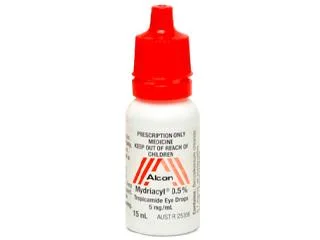
Key points
- Expected dilation after examination causes temporary light sensitivity and blurred near vision.
- The effect and duration depend on the drop, eye characteristics, age and other medicines.
- Sudden unequal pupils with headache, eyelid droop, double vision or confusion require urgent assessment.
A dilating-drop listing is not for unsupervised use; glaucoma risk, examination purpose, age and systemic contraindications guide selection.
Why are pupils dilated clinically?
Dilation lets an examiner inspect the retina, optic nerve and lens. Cycloplegia also relaxes focusing for accurate refraction, particularly in children. Cyclopentolate and tropicamide differ in cycloplegic strength and duration; see eye care for context.
What precautions matter after drops?
Near vision and glare can remain impaired until the effect resolves, so driving should wait until vision is safe. Severe eye pain, redness, haloes, headache or nausea after dilation can indicate acute angle closure.
When to seek urgent care
Seek emergency care for a new unequal pupil with severe headache, eyelid droop, double vision, weakness, confusion or recent head injury. Severe eye pain or vision loss after dilating drops is also urgent.