
Alopecia Areata
Alopecia areata is an autoimmune condition in which the immune system attacks hair follicles, causing smooth, sharply defined patches of hair loss without scarring.
Key points
- Hair follicles remain present, so regrowth is possible, but the course is unpredictable and recurrence is common.
- A scalp examination helps distinguish alopecia areata from fungal infection, hair pulling and scarring disorders.
- Treatment depends on age, extent, duration, nail changes and the effect of hair loss on wellbeing.
The listings below do not confirm the diagnosis or guarantee regrowth; dermatology assessment is useful for extensive or uncertain cases.
Recognising the pattern
Patches are usually smooth, with short tapered “exclamation-mark” hairs sometimes visible at the edge. Eyebrows, eyelashes, beard or body hair can be affected, and small nail pits may occur. Scale, marked redness or broken hairs point toward other diagnoses.
Treatment and expectations
Small recent patches may regrow without treatment. Corticosteroids can suppress local inflammation, while more extensive disease may lead to consideration of systemic or targeted therapies with greater monitoring needs. Cosmetic camouflage and psychological support are legitimate parts of care.
When to seek urgent care
Alopecia areata is not usually an emergency. Seek prompt assessment if hair loss follows a severe medicine reaction, occurs with blistering or skin pain, or is accompanied by signs of infection or significant systemic illness.
Further reading
Related articles
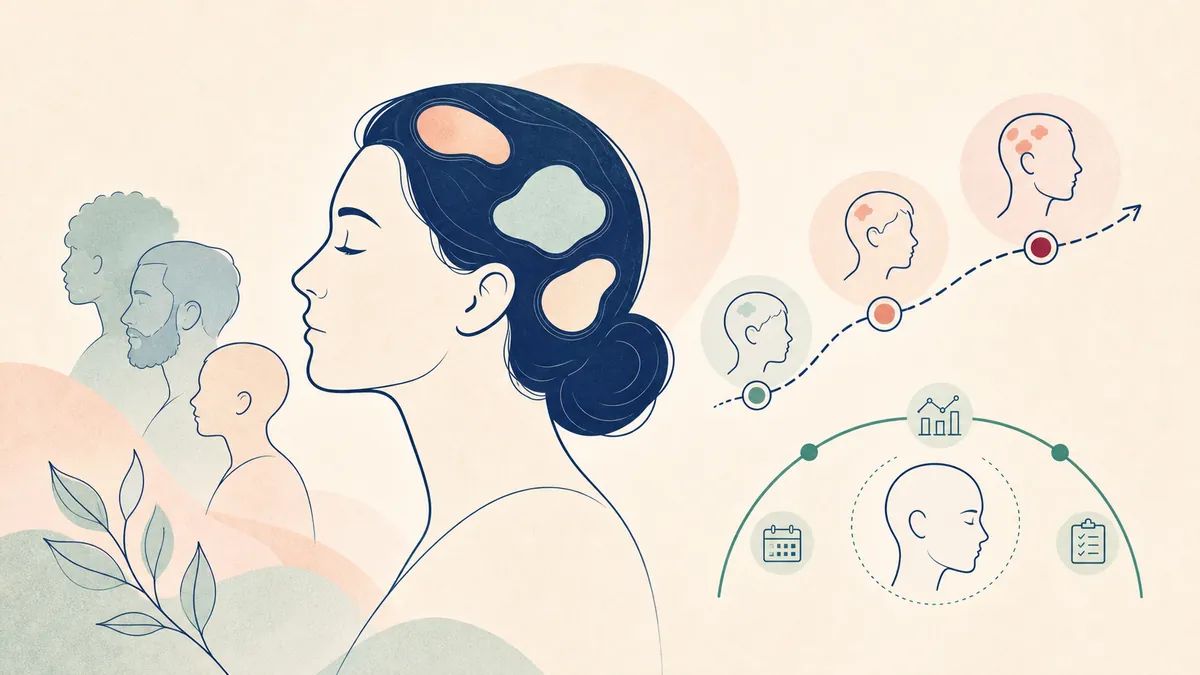
Learn why alopecia areata treatment differs for a few recent patches, extensive loss, children and adults, and what JAK-inhibitor monitoring involves.
Read guide
22 Sept 2026 ⋅ 7 min read
Women's Hair Loss: Why Pattern and Cause Change the Treatment
Compare gradual patterned thinning with diffuse shedding, patchy loss and scalp disease before considering minoxidil or prescription options.
Read guide