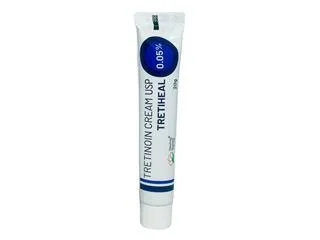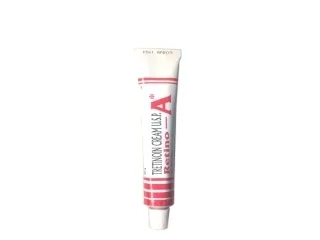
Retin-a Cream
0.025 · 0.05%
Tretinoin cream at 0.025% and 0.05%, applied for acne vulgaris and photoageing. It normalises keratinisation so microcomedones do not form.
From$12.35/ tubeView
Photoageing is the skin damage that accumulates from years of ultraviolet exposure rather than from the natural ageing process. It accounts for most visible changes people associate with older-looking skin: deep wrinkles, uneven pigmentation, rough texture, and reduced elasticity.
0.025 · 0.05%
Tretinoin cream at 0.025% and 0.05%, applied for acne vulgaris and photoageing. It normalises keratinisation so microcomedones do not form.
The listings below do not distinguish cosmetic sun damage from a precancerous or cancerous lesion; diagnosis comes before retinoid or procedural treatment.
UV radiation breaks down collagen and elastin in the dermis, the structural proteins that keep skin firm and smooth. The outer layer thickens and roughens, pores appear enlarged, and fine blood vessels may become visible. These changes are distinct from intrinsic ageing and can begin appearing in a person’s thirties, or earlier with heavy, unprotected sun exposure.
It is used nightly, starting at a low concentration to allow the skin to adapt, and improvement in fine lines and tone typically becomes visible after several months of consistent use. Retinoid therapy sits within the broader skin care category of treatments at SGMeds.
Photoageing itself is not an emergency. Arrange prompt assessment for a new or changing mole, a sore that does not heal, unexplained bleeding, or a rapidly changing pigmented patch. Stop a topical product and seek urgent help for facial swelling, breathing difficulty, blistering or a severe widespread reaction.